
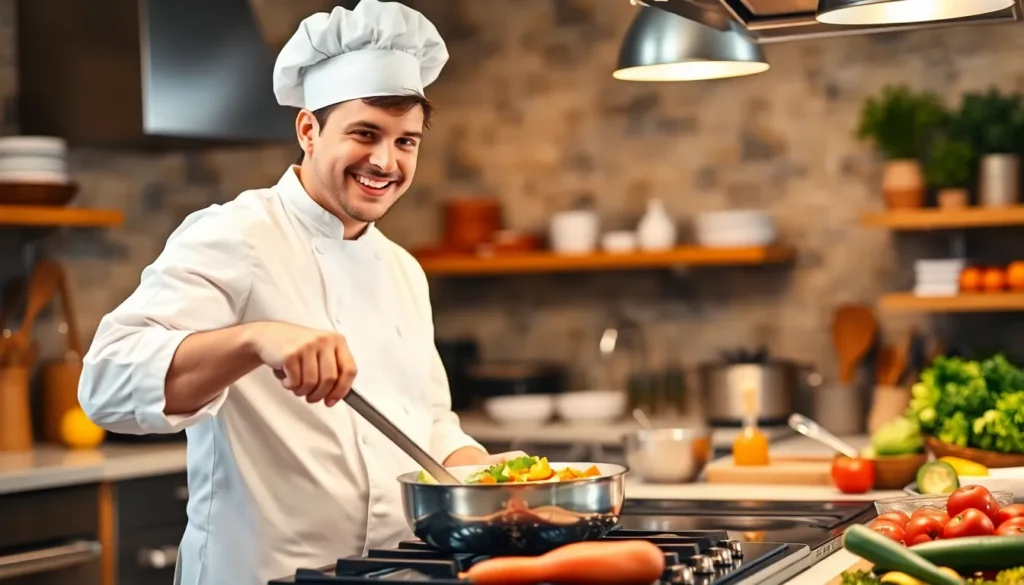
In the grand arena of culinary arts, cooking techniques reign supreme. Whether you’re a novice who still thinks boiling water is a high-stakes challenge or a seasoned chef with a flair for flambé, mastering these techniques can elevate any dish from “meh” to “magnificent.” Imagine transforming a humble vegetable into a gourmet masterpiece with just a sprinkle of know-how.
Overview of Cooking Techniques
Cooking techniques play a crucial role in culinary arts. They encompass a range of skills essential for preparing flavorful dishes. Mastery of various methods can elevate ordinary ingredients to gourmet status. Techniques include baking, boiling, grilling, sautéing, and steaming.
Baking involves cooking through dry heat in an oven, suitable for pastries and bread. Boiling uses water or broth at high temperatures, ideal for pasta and vegetables. Grilling exposes food directly to heat sources, creating distinct flavors and char. Sautéing requires cooking food quickly in a small amount of oil or fat, perfect for achieving tenderness and enhancing flavors. Steaming cooks food using steam, preserving nutrients better than other methods.
Other significant techniques involve roasting, frying, and braising. Roasting surrounds food with dry heat, producing a crispy exterior and tender interior. Frying includes techniques like deep frying, which submerges food in oil, generating crisp textures. Braising combines both wet and dry cooking techniques, slow-cooking meats in liquid for enhanced flavor.
Understanding these techniques offers a foundation for creativity in the kitchen. They enable culinary exploration, allowing chefs to experiment with different ingredients and flavor profiles. By employing various cooking methods, dishes can achieve diverse textures and tastes. Mastering these fundamentals opens opportunities for enhancing culinary experiences, appealing to both home cooks and professional chefs.
Types of Cooking Techniques
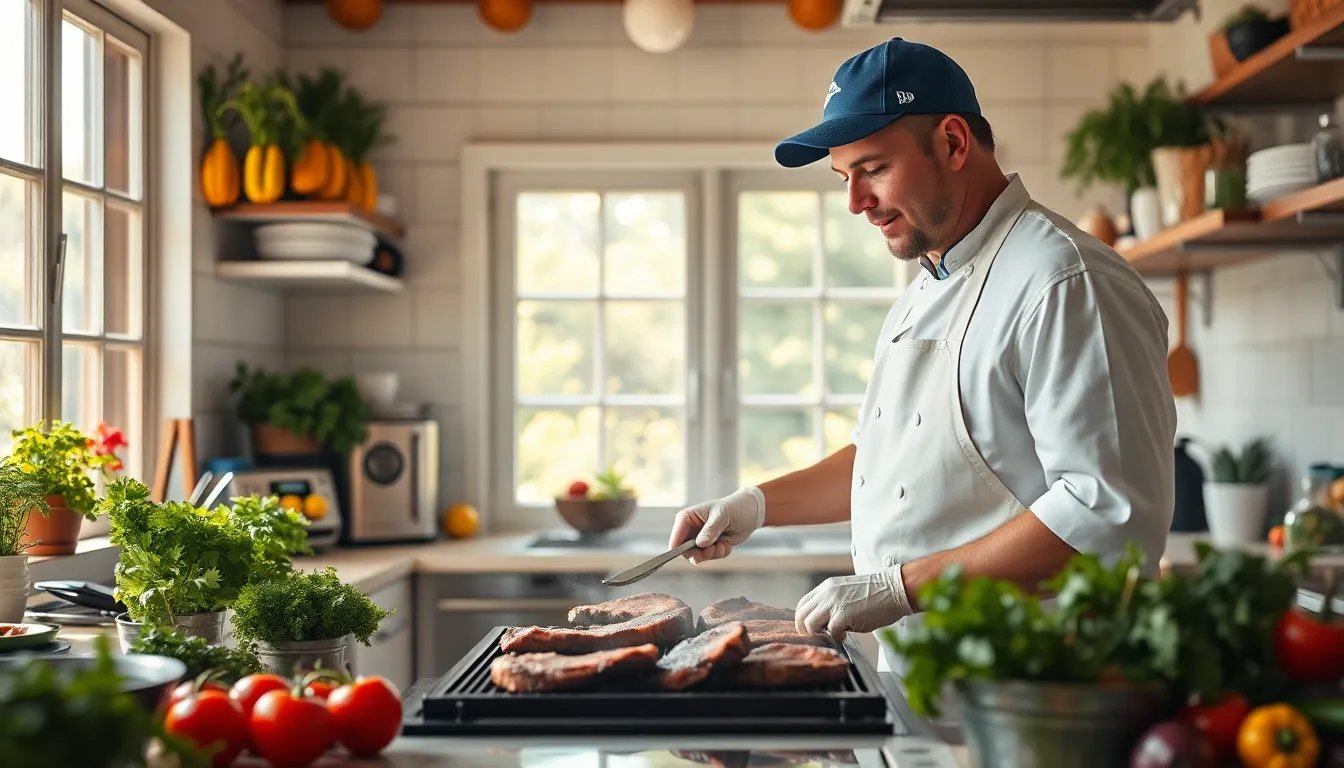
Cooking techniques fall into two primary categories: dry heat cooking and moist heat cooking. Each method influences flavor, texture, and moisture content, playing a crucial role in culinary outcomes.
Dry Heat Cooking
Dry heat cooking techniques utilize direct heat to prepare food. Baking involves surrounding dishes with dry heat in an oven, suitable for items like bread and pastries. Roasting enhances flavor by caramelizing the surface of meats and vegetables. Grilling cooks food over an open flame, imparting unique smoky notes. Searing creates a flavorful crust by quickly browning meat on high heat. Each method relies on heat transfer, transforming ingredients into delicious meals.
Moist Heat Cooking
Moist heat cooking methods rely on liquid to prepare food, promoting tenderness and flavor infusion. Boiling cooks food by immersing it in bubbling water, ideal for pasta and vegetables. Steaming preserves nutrients and texture by cooking ingredients over boiling water. Braising combines both moist and dry heat, starting with searing and followed by slow cooking in liquid. Poaching uses gentle heat to cook delicate foods like eggs and fish. These techniques enhance the natural flavors of ingredients while ensuring a satisfying culinary experience.
Popular Cooking Techniques
Understanding various cooking techniques enhances culinary skills. Mastering these methods reveals flavors and textures that elevate dishes.
Sautéing
Sautéing cooks food quickly in a small amount of fat, typically oil or butter. This technique involves high heat, allowing ingredients to brown while retaining moisture. Vegetables like bell peppers and onions become crisp and flavorful through this method. Chefs often use sautéing for proteins, including chicken and shrimp, which develop a seared exterior. It’s essential to keep food moving in the pan to prevent sticking and ensure even cooking.
Roasting
Roasting utilizes dry heat to cook food evenly in an oven. This method works beautifully for meats and vegetables, producing a caramelized exterior that enhances flavors. For instance, roasting a chicken brings out savory notes while keeping the meat tender. Many cooks season their ingredients with herbs and spices before placing them in the oven. This technique also allows for flavor development through browning, making it an ideal choice for hearty meals.
Braising
Braising combines both wet and dry heat methods for rich culinary results. Typically, it starts with browning meat or vegetables in a pot, followed by slow cooking in liquid. Stocks, wines, and sauces contribute depth to the dish. Cuts of meat that require longer cooking times, such as brisket or pork shoulder, benefit from this technique. Flavorful ingredients added during the braising process create a tender, succulent result that enhances every bite.
Essential Tools for Cooking Techniques
Essential tools enhance the effectiveness of cooking techniques. Utilizing the right equipment simplifies processes and improves outcomes.
Cookware
Versatile cookware forms the backbone of effective cooking. Quality pots and pans, including sauté pans, stockpots, and Dutch ovens, facilitate various techniques. Non-stick options allow for easy food release during sautéing and frying. Heavy-duty cast iron skillets retain heat well, ideal for searing and frying. Additionally, stainless steel pans offer durability and excellent heat conduction for browning and deglazing. Precise sizes accommodate different portions, ensuring even cooking. Opting for well-made bakeware fosters successful baking, yielding attractive results in pastries and bread.
Utensils
Utensils play a crucial role in executing diverse cooking techniques. Essential items include chef’s knives, wooden spoons, spatulas, and tongs. A sharp chef’s knife handles chopping, slicing, and dicing with ease. Wooden spoons mix ingredients thoroughly, reducing the risk of scratching cookware. Spatulas, both heat-resistant and flexible, facilitate flipping and spreading tasks. Tongs provide grip for turning meats and serving salads. Additionally, measuring cups and spoons ensure accuracy when following recipes. Establishing a well-equipped utensil set streamlines the cooking process and helps achieve consistent results.
Mastering cooking techniques opens the door to a world of culinary possibilities. Whether someone is a novice or a seasoned chef the right methods can elevate even the simplest ingredients into remarkable dishes. Each technique from baking to braising brings its own unique flair to the table.
Equipped with essential tools and knowledge anyone can confidently explore various cooking styles. Embracing these techniques not only enhances flavor and texture but also inspires creativity in the kitchen. As individuals refine their skills they’ll discover the joy of cooking and the satisfaction that comes from crafting delicious meals.